
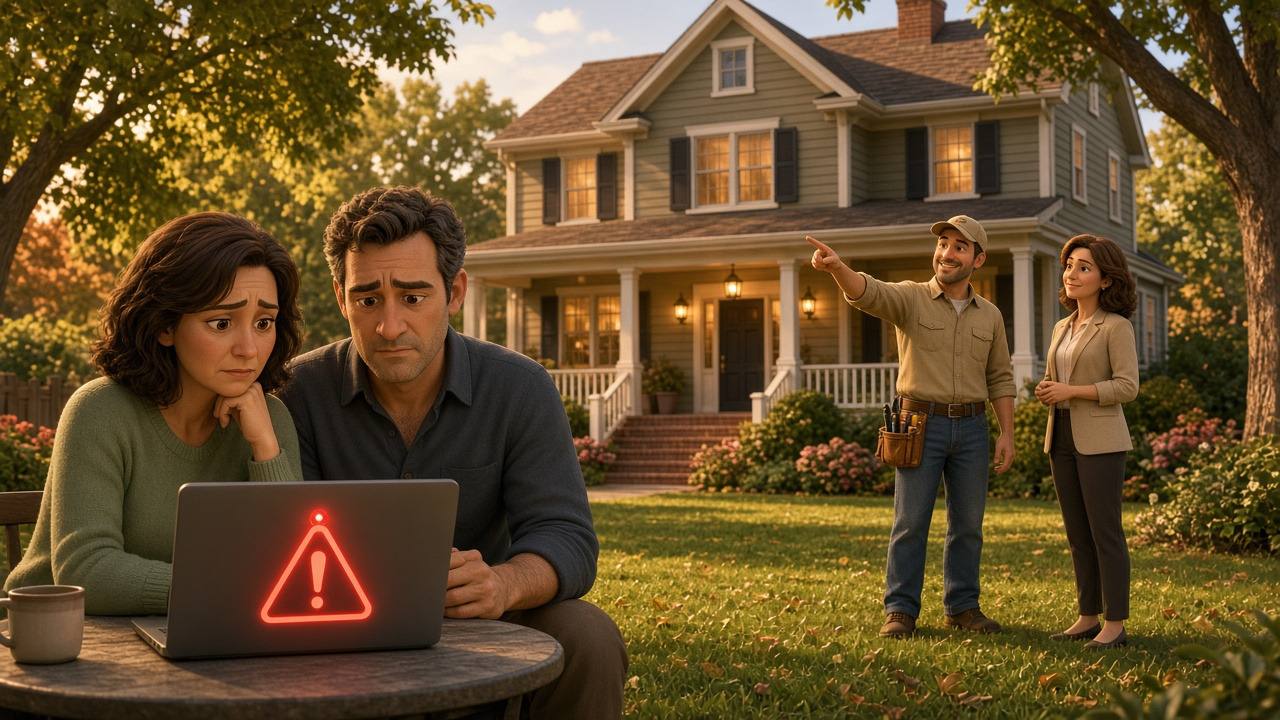
No, you should not drop your home inspection report into an AI chatbot. It can turn a normal list of findings into a nightmare. AI lacks context. It never saw the house, and it does not know what’s typical for a Long Island home. Therefore, rely on the people who do: the licensed inspector who walked it, your agent, your real estate attorney, and, for the big items, a contractor who can actually look at the work.
Why the report looks scarier than the house
Inspection reports flag everything. That’s their job. You’ll see minor items, cosmetic items, and boilerplate language like “further evaluation recommended.” A careful inspector is being thorough, not sounding an alarm on every line. A long report is not, by itself, a reason to panic. It often means the inspector was complete.
Moreover, those phrases are standard. They protect the inspector and point you to a specialist when something needs a closer look. They are not a verdict that the house is failing.
When you paste the whole report into a chatbot, the tool can treat every line as an emergency. A loose outlet, an aging water heater, and a hairline crack in a sidewalk can all come back sounding equally urgent.
AI lacks context
As Brad Wilson, Broker Owner of Jones Hollow Realty Group, puts it:
“AI lacks context. Rely on the pros.” — Brad Wilson, Broker Owner, Jones Hollow Realty Group
The chatbot did not walk the attic. It did not crawl the basement. It did not stand in the yard and look at the roof. It is reading words on a page.
It doesn’t know the age of the home, or what’s normal for a Long Island house of that era. An older colonial is not a brand-new build. Some findings are typical for the age of the house. Some are not. Your inspector can tell the difference because they were there.
It doesn’t know local codes, or what’s typical and negotiable in a Long Island deal. It can’t see the photos in context. A picture of a stain can look dramatic on a screen. In the house, it may be an old mark that has been dry for years.
Moreover, AI can be confidently wrong. It can sound sure while it misreads a finding. It can invent repair costs. Those figures can feel official. They are not a quote from someone who has seen the work.
What can go wrong
The result is scared buyers. You may walk away from a good home because a chatbot ranked every note as a crisis. Or you may overreach on repair requests and lose the deal.
On Long Island, you often do not get a long stretch to sort this out. If your requests are based on a panicked reading instead of the inspector’s own priorities, the seller may say no. The next buyer may not make the same ask. A fair request, grounded in what the inspector called major, is a different conversation.
Therefore, the risk is not only that AI might misread a sentence. The risk is that it can change how you feel about the house, and how you negotiate, before the pros have had a chance to explain the report.
A word about privacy
There’s a practical privacy point, too. A home inspection report usually includes the property address and details about the seller’s home. If you upload that report to a public AI tool, you are sending that information to a service you do not control.
We’re not making a legal claim here. We’re asking you to be careful. If you wouldn’t post the report on a public website, think twice before pasting it into a chatbot.
What to do instead
Walk the house with the inspector if you can. Ask questions while you’re there. Point to what you see. That is the context no chatbot has. If you cannot be there in person, get on a call with the inspector once you have the report in front of you. Go item by item. Take notes on what they say is urgent and what can wait.
When the report arrives, go through it with the inspector. Ask what’s major, what’s minor, and what’s just maintenance. Ask which items need a specialist, and which ones you can plan for after you move in.
For the big items, get a real contractor or specialist to look at the house and give you a quote. A number from someone who has seen the work is worth more than a guess from a tool that hasn’t.
Then talk with your agent and your real estate attorney. They can help you decide what to ask for, what to accept, and what is normal in a Long Island contract. That’s their job.
It’s fine to use AI to look up what a term means. If you don’t know what a GFCI outlet is, a short definition can help. It is not fine to ask AI to judge the house, price the repairs, or tell you whether to walk away.
Frequently asked questions
Is any use of AI okay with an inspection report?
Yes, for definitions. Look up a term you don’t know. Don’t paste the full report and ask the tool to rate the house, estimate repairs, or tell you what to negotiate.
Can’t I just delete the address first?
You can remove some details, but the report is still about a specific house the tool has never seen. The bigger problem is the lack of context, not only the name on the first page. Even a redacted report can be misread.
What if the report really does look serious?
That’s when you lean on the pros, not a chatbot. Call the inspector and ask them to explain the finding. If it’s a major item, get a specialist into the house. Then decide with your agent and attorney.
Will my agent be upset if I already tried AI?
No. Bring the report and your questions. Your agent would rather help you sort the real issues from the noise than watch a good house slip away over a scare.
Ready to talk through your inspection?
A good inspection should help you buy with your eyes open, not send you into a panic. Jones Hollow Realty Group can help you review the findings with your inspector, your attorney, and, when needed, the right contractor. Contact us at joneshollowrealty.com, or stop by our office at 136 Carleton Ave in East Islip.


